
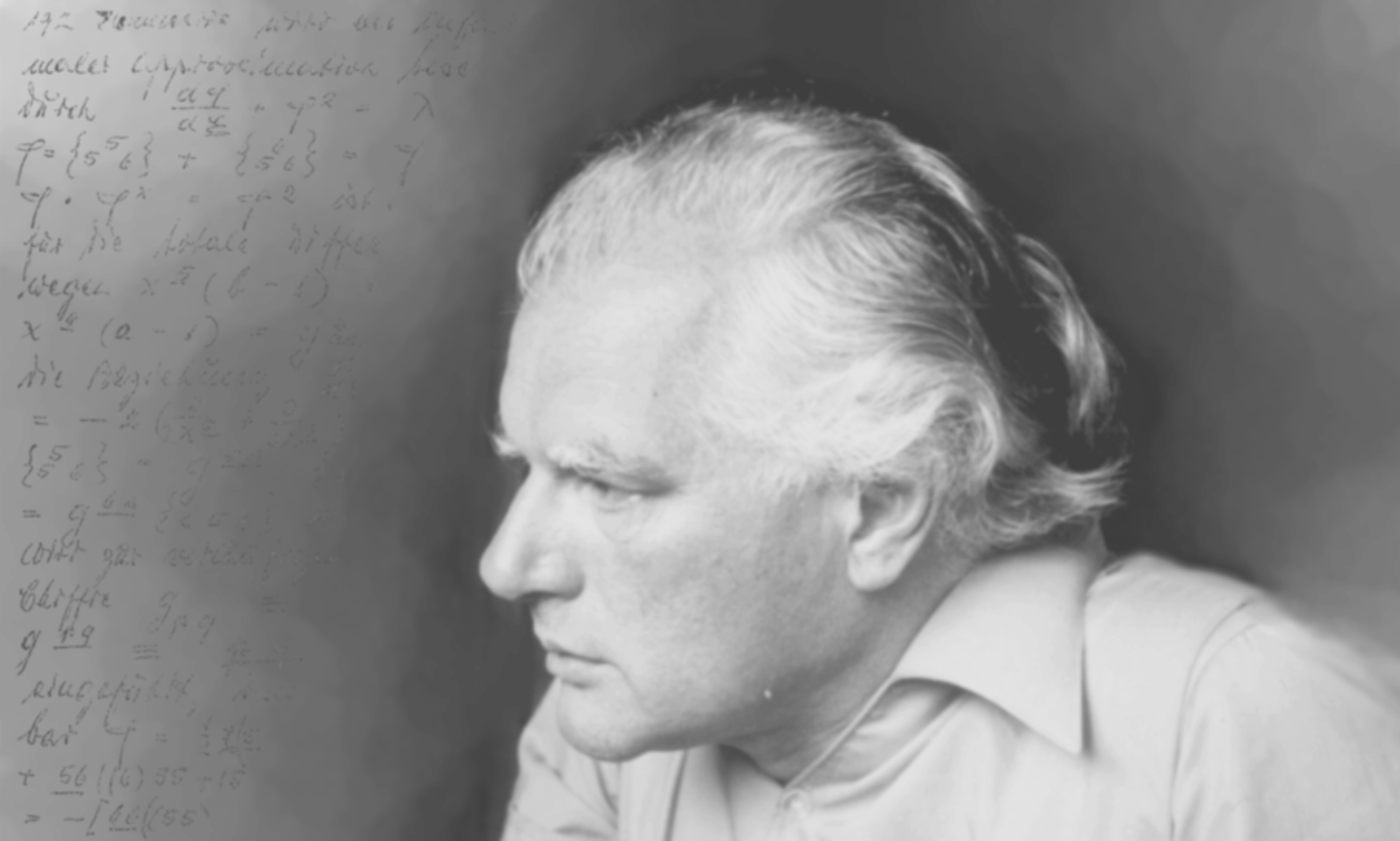
PDF-document for download:
(Free book edition 2021 – ISBN 978-3-9820381-2-4)
Illobrand_von_Ludwiger-The_New_Worldview_of_the_Physicist_Burkhard_HeimDownload
Burkhard Heim (1925–2001) was a German physicist and independent theorist whose work belongs among the most unusual intellectual projects in the recent history of physics. Over the course of decades, he worked on the attempt to think gravitation, matter, elementary particles, cosmology, and ultimately also questions of organization, life, consciousness, and knowledge within a larger theoretical context. Anyone who seriously engages with Heim therefore encounters not merely a field theory or a mass formula, but a comprehensive scientific program extending from the geometry of the physical world to methodological and ontological first principles.
Early Years: Gifted Tinkerer and Early Fascination with Rockets
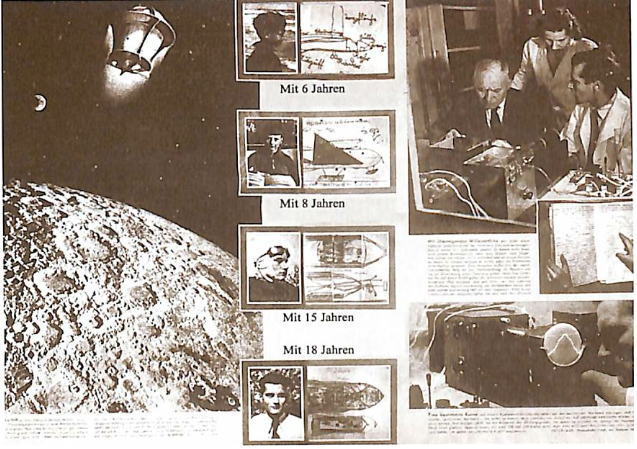
Burkhard Heim was born on February 9, 1925, in Potsdam. Already in childhood he showed an unusually early aptitude for scientific and technical questions. His parents, and especially his grandfather, told him about the night sky from an early age and encouraged him to ask questions. Astronomy, chemistry, physics, and technology soon became among his strongest interests. Even as a child he knew the positions of important planets and constellations, taught himself Chinese characters, and developed a pronounced joy in independent experimentation.
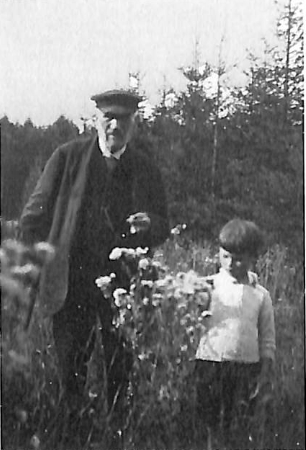
Particularly striking was his early fascination with rockets and explosive chemistry — long before the V-2 or rocket technology in general had become a reality. As a boy, Heim already wanted to become a “rocket builder.” He set up a laboratory in the cellar of his parents’ house, read books on explosive chemistry, produced TNT in his own way at the age of eleven, and at twelve built a rocket which he launched with friends across Lake Templin, where it ultimately punched a large hole into the ice. At fifteen he became a glider pilot and designed a “rocket powered by atomic energy.” This early combination of theoretical imagination, technical boldness, and practical inventiveness is an essential part of his later profile.
School, Heisenberg, and the 1944 Accident
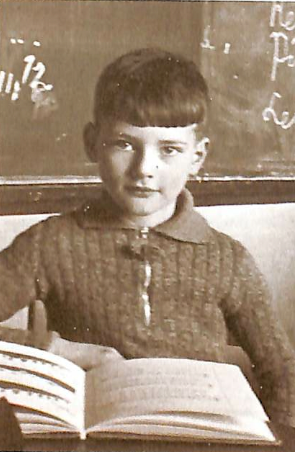
Heim was not a conventional model student. He was regarded as highly intelligent, but also as headstrong, restless, and eager to experiment. This very nonconformity remained part of his biography throughout his life. Even before graduating from secondary school, he submitted an essay on electron pair formation to a professor at the Berlin Research Institute, who recognized the young man’s potential and encouraged him to continue his education and pursue university studies. In 1943 Heim completed his Abitur in Berlin. During this period he was already studying Otto Hahn’s work on nuclear fission and thinking about methods for initiating chain reactions. Werner Heisenberg, to whom Heim presented an idea for igniting tritium by means of shaped-charge explosives — thereby conceiving a “clean” fusion bomb in principle even before the first atomic bomb had become a reality — was impressed by the young man’s knowledge, even if he did not regard the approach as practical.
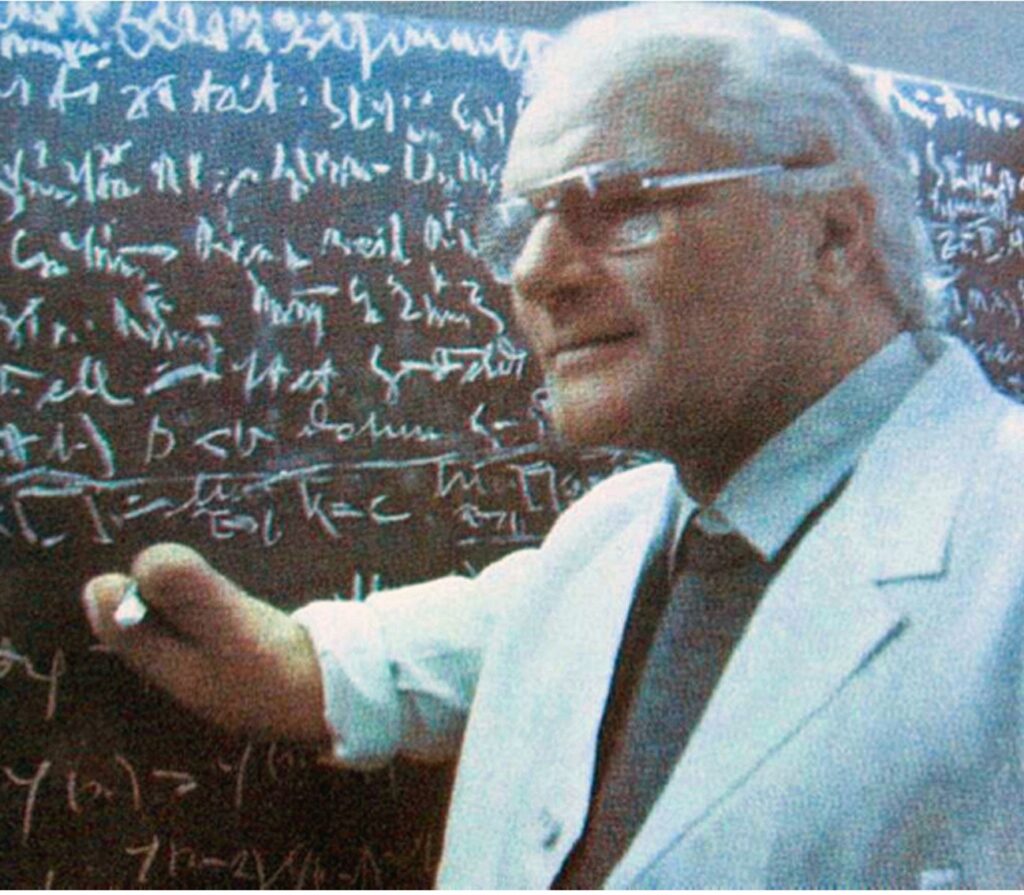
In 1944, after writing an essay on explosives, Heim was assigned to the Chemical-Technical Reich Institute in Berlin to help develop new explosives, and thus escaped being sent to the front in Italy. There, on May 19, 1944, an explosion occurred during an experiment that radically changed his life. Heim lost both hands, suffered devastating injuries to his face and eyes, lost most of his sight and hearing, and had to undergo numerous operations in the years that followed. That under such conditions he was able to resume his studies at all, and later achieve extraordinary theoretical work, remains one of the most remarkable aspects of his biography.
From Chemistry to Theoretical Physics
After the end of the war, Heim came via Upper Bavaria to Northeim and in 1946 enrolled at the University of Göttingen, initially to study chemistry. This point is central to his life: his first actual academic goal was not physics, but chemistry. However, he had to abandon those studies — not because of any lack of interest, but because the required laboratory practicals were impossible under his physical conditions. It was precisely this limitation that brought about the decisive turning point. Heim therefore chose theoretical physics, from which he expected, in his own words, a “far higher cognitive value.” In 1949 he began studying theoretical physics in Göttingen and completed the main diploma in 1954.
This phase already reveals something essential about Heim: his theory did not arise only after his university studies, but in parallel with them. Already from 1949 onward he was independently working on a general field theory in which physical fields and their sources were to be understood as dynamic properties of geometric structures. His studies thus served him less as preparation for an ordinary career than as an expansion of his horizon and a methodological deepening of his own work. He studied in a focused way in order to deepen his mathematical knowledge and thereby make his own theoretical ideas workable.
Göttingen and His Teachers
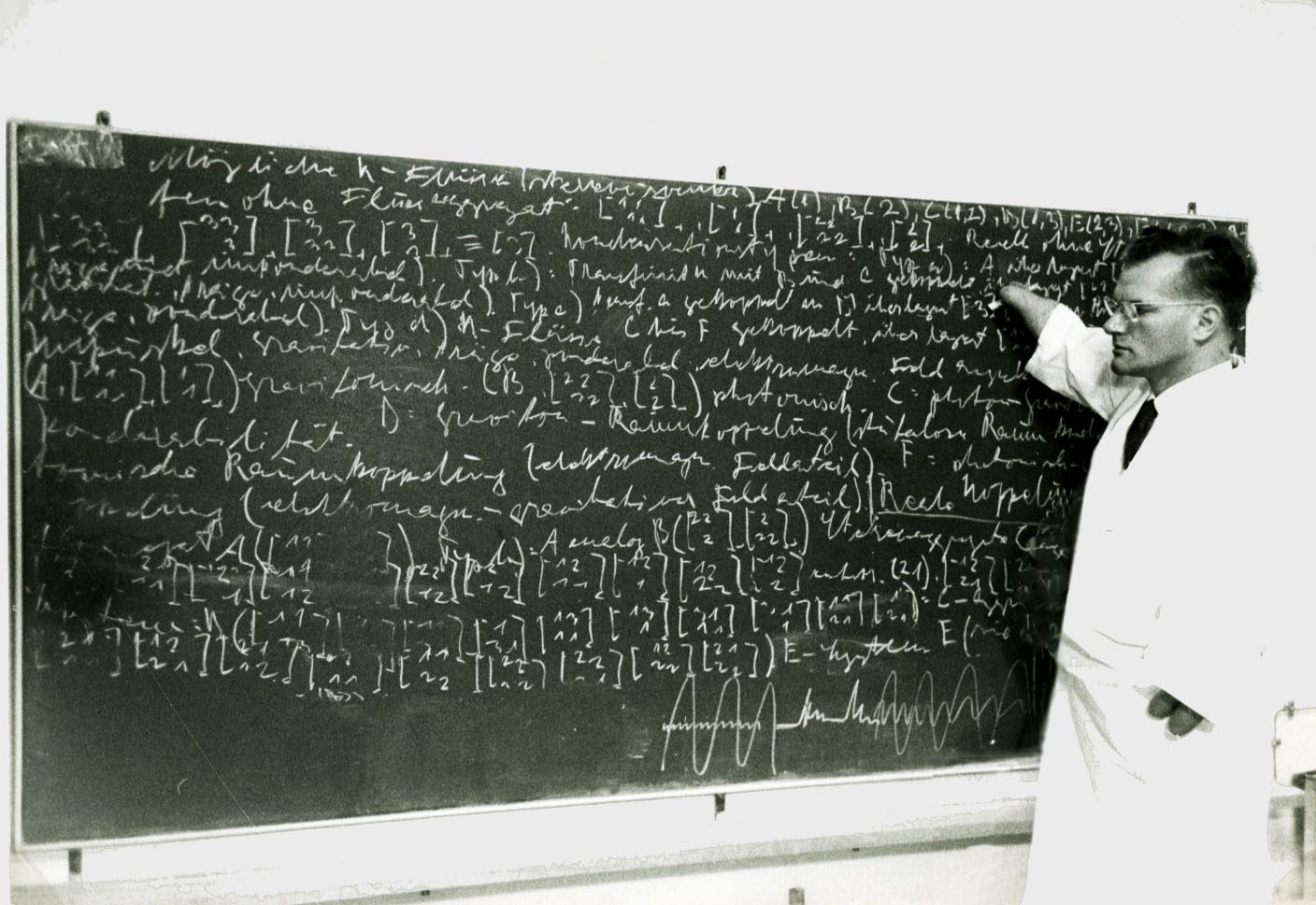
Heim studied in Göttingen under well-known scholars. He took his diploma examination in 1954 with Carl Friedrich von Weizsäcker, Prof. Becker, and Gebhard Lyra; his diploma thesis dealt with the physical processes in the Crab Nebula supernova. Von Weizsäcker then brought him into his group at the Max Planck Institute for Astrophysics in Göttingen. Heim also encountered Max Planck in Göttingen, who, according to Gerda Heim’s account, once helped him across the street and with whom he had an unforgettable conversation. These names alone show that Heim was by no means completely outside the scientific world, but was embedded in a real German academic landscape — albeit in an unusual way and under extremely difficult circumstances.
At the same time, his relationship to the academic environment remained tense. When Heim raised the topic of space travel at the Max Planck Institute, he was told that serious scientists did not believe that one day it would be possible to see the Moon from the other side. Gerda Heim reports how deeply such reactions affected him. After the launch of Sputnik, the very same ideas suddenly appeared in a different light. This episode is small, but telling: Heim often moved at the edges of what his contemporaries regarded as respectable, or even worthy of discussion at all. At that time he was already working on concepts for a propulsion system not based on classical mass ejection, and in this he was far ahead of his time.
Independent Theoretical Work and Early International Exchange
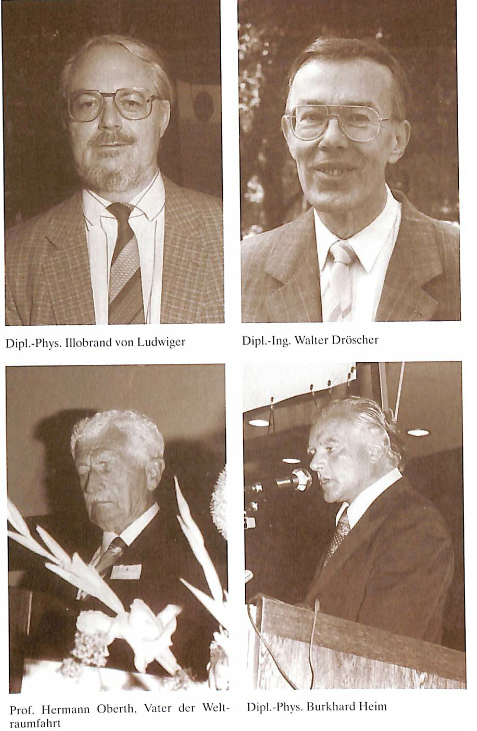
Already during his studies, Heim was working on a new descriptive method with which he sought to bridge the rift between relativity theory and quantum theory. As early as 1952 he presented parts of his theory at an international congress in Stuttgart. There he also met again Hermann Oberth, the “father of space travel,” whom he had already known from the Berlin milieu. His lecture bore the title Comparison of Dynamic Contrabarie with the Rocket Principle. Heim thus moved simultaneously in the vicinity of gravitation theory, field propulsion, and questions of spaceflight.
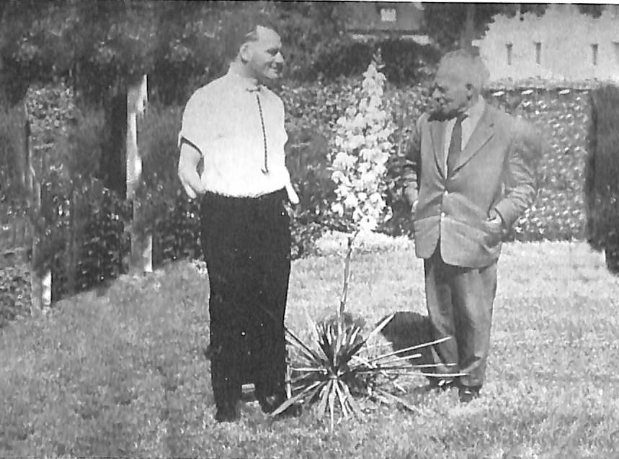
His contacts did not remain limited to this environment. Wernher von Braun, in his NASA role, made inquiries about Heim’s work and wanted to be kept informed about progress. Heim corresponded with Václav Hlavatý, engaged intensively with Einstein, later maintained close professional exchange with Pascual Jordan, encountered Hans-Peter Dürr, was brought into contact with physicists from CERN and DESY, and discussed with philosophers such as Hedwig Conrad-Martius, who explained to him in epistemological terms how his physical ideas could fit into an ontologically expanded system of thought. These contacts show that Heim, although he published very little in the usual academic channels, nevertheless stood in repeated exchange with high-level interlocutors from physics, philosophy, and space research.
Why Heim Did Not Simply “Go into Peer Review”
It would be historically false to portray Heim as someone who simply never came into contact with specialists. It would be equally false, however, to pretend the opposite — namely, that he integrated himself normally into the academic publication process. Neither is true. Heim gave lectures in Germany and abroad, spoke with well-known physicists, repeatedly sought contact with universities, and won the interest of individual experts. At the same time, for long stretches he published almost nothing in the usual academic form. Gerda Heim explicitly reports that, aside from the article in the journal Zeitschrift für Flugkörper, there were for a long time no specialist articles by him; as a result, he remained largely unknown in professional journals and was scarcely cited.
The reason for this lay not only in external rejection, but also in Heim himself. After a lecture that had been recorded without permission and later partially appropriated, and after further disappointing experiences, his mistrust grew considerably. He resolved to publish more comprehensively only once a certain degree of completion had been reached. Added to this was the fact that Heim did not want to release his theory in an incomplete, merely provisional form if it could be avoided. This desire was also bound up with his self-understanding: he did not merely want to circulate claims, but rather as far as possible a coherent whole supported by experiment or numerical verification.
Experimental Verification Instead of Premature Publication
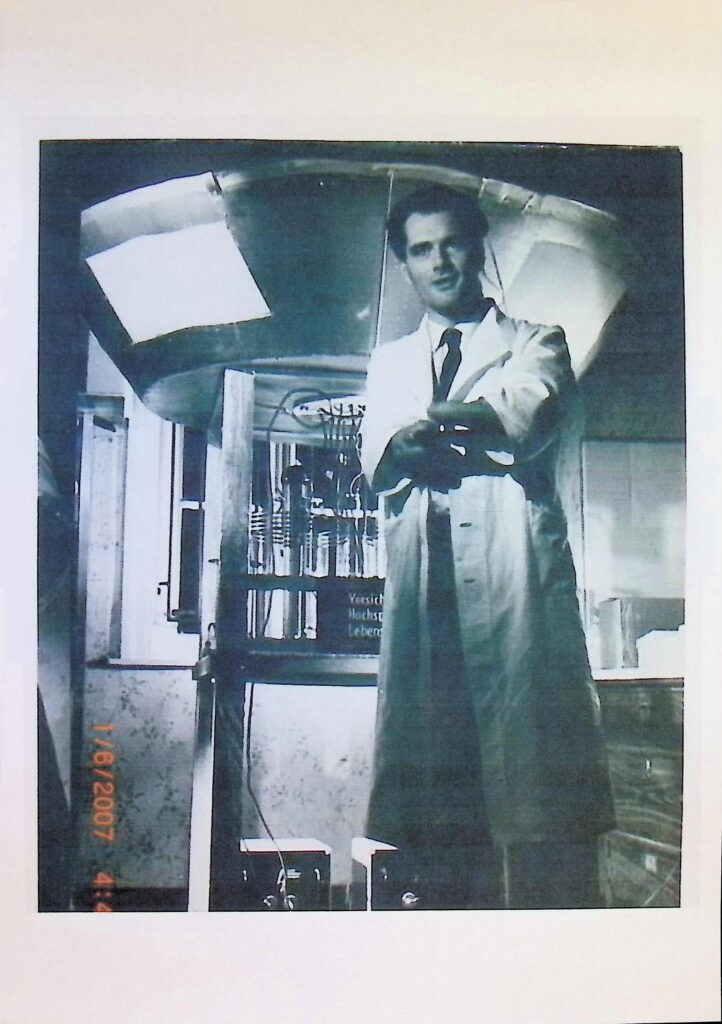
A central biographical trait of Heim’s is therefore his attempt first to test his theory experimentally himself. In 1956/57 he attempted a direct experimental verification of a natural effect predicted by his theory. This attempt did not succeed unambiguously, above all because the means available to him were too primitive. Nevertheless, in 1958 Heim founded the German Research Institute for Force Field Physics and General Cosmology in order to continue the investigation and experimental verification of his work. Even later he continued thinking in terms of experimental tests, for example together with Pascual Jordan on magnetic fields of rotating masses. One may therefore say: Heim delayed publication not only out of mistrust, but also because he wanted theory and verification to remain more tightly bound together than the ordinary publication rhythm allowed.
Difficulties of Publication, Universities, and the Late Books
When Heim tried in the 1970s to present his theory on a larger scale, the next difficulty became apparent. According to Gerda Heim’s account, he approached universities, beginning with Göttingen, with a manuscript of roughly 1,500 pages. The reactions were apparently discouraging; further universities returned the material immediately, seemingly unread. The scientific publisher Springer also showed no clear willingness to take it on and demanded an English version, which under the given conditions was not easy to produce. What is therefore securely documented is this: Heim sought academic and publishing acceptance for his major theoretical work, but did not receive it in the form that would have opened to him a normal professional academic career.
As a result, the major works were made accessible primarily through the editorial efforts of Andreas Resch, Gerda Heim, Walter Dröscher, and other helpers. From this eventually emerged the volumes Elementarstrukturen der Materie, Strukturen der physikalischen Welt und ihrer nichtmateriellen Seite, and the Einführung in Burkhard Heim. The fact that these books did not appear through an ordinary physics publishing house and were mostly available only in German further contributed to Heim remaining, at best, marginal within the international scientific community.
Work with Messerschmitt-Bölkow-Blohm (MBB)
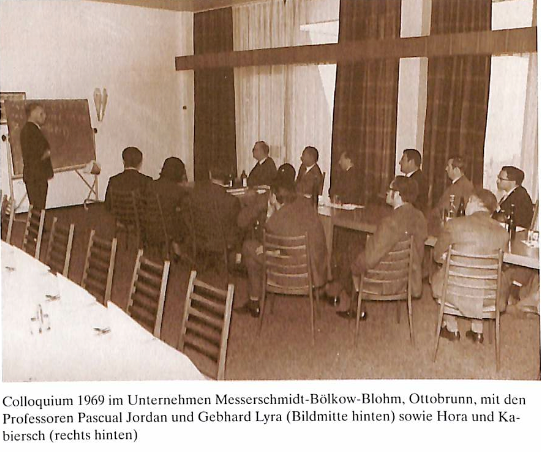
A less widely discussed aspect of Burkhard Heim’s scientific activity is his interaction with the aerospace industry, in particular with Messerschmitt-Bölkow-Blohm (MBB). In this context, Heim was invited to present his theoretical work to a technically oriented audience.
During a presentation at MBB (Ottobrunn), Heim outlined the core ideas of his unified field theory and its possible physical and technical implications. This lecture is notable in that Heim presented his otherwise highly complex theory in a comparatively accessible form, placing particular emphasis on the methodological foundations of his work.
A central point of his argument was that scientific knowledge arises from the processing of observable events, and that the physical world represents only one part of a broader structural reality. Heim explicitly distinguished between events in the external, measurable world and those belonging to an internal experiential domain that cannot be directly described in terms of space and time .
In addition to these conceptual considerations, discussions in the MBB context also touched on possible experimental approaches, particularly regarding gravitational effects and their potential technical detectability. However, such considerations were not pursued further within an industrial framework.
The MBB presentation remains an important document, as it provides a rare insight into Heim’s attempt to place his theory within a technical-scientific context and to relate it to potential applications.
What Heim Theoretically Actually Wanted
The theoretical scope of his work is larger than physics itself. Heim began with the search for a unified field theory of matter and gravitation, developed from this a multidimensional geometric description of the world, derived from it his well-known mass formula, and later extended the framework to questions of organization, life, psyche, pneuma, postmortem states, and an expanded methodological logic. It becomes especially clear in the later works that Heim did not understand his physics as an isolated specialist theory, but as part of a more comprehensive picture of the world and of the human being. Heim was aware of the Galilean renunciation: the methodological self-limitation of modern natural science to that which can be quantitatively grasped. His thinking therefore aimed not only at a deepened physics of quanta, but at an expanded theoretical framework in which aspects of organization, meaning, and experience are not excluded from the outset. In this sense, he wanted to move beyond a merely quantitative description of the world without abandoning the rigor of scientific thought.
Heim Today
To this day, Burkhard Heim occupies a peculiar position. On the one hand, he stands outside the usual canon of modern physics; on the other hand, there is a persistent circle of readers, editors, and researchers working on the reconstruction and examination of his work. His texts are difficult, his notation is idiosyncratic, his publication history was fragmentary, and some things remained unfinished. Precisely for this reason, his work requires patient editorial, historical, and mathematical development.
This website understands itself as a contribution to that task. It does not aim either to elevate Heim apologetically or to dismiss him prematurely, but to make his life, his texts, his theory, and their later history accessible in such a way that serious engagement becomes possible. Anyone who wishes to do justice to Burkhard Heim must see both: the extraordinary biographical achievement of a severely disabled and highly gifted thinker, and the objective task of reading his work in a calm, precise, and testable way — and of turning from it the immense task of making an applicable and verifiable theory.
At the end of all this stands the great potential of a body of work capable of bringing back together what, in the course of modern science, gradually separated itself step by step from the original comprehensive horizon of philosophy. From the one question concerning world, being, knowledge, and order, there gradually emerged individual disciplines that each gained in precision, yet often lost sight of one another and of the greater whole. Precisely here lies the possible significance of Heim’s approach: not in a mere addition of subject areas, but in the attempt to uncover a deeper common foundation. Especially in Heim’s metalogic lies the potential for an overarching structural language capable of building bridges — from physics through biology to psychology, and ultimately to the question of consciousness and reality itself.
Note on presentation:
Some assessments on this page follow the historical presentation associated with Illobrand von Ludwiger and the earlier Heim working group. They therefore also document the reception and evaluation of Burkhard Heim’s work within that historical context. Not every such formulation should be understood as present-day scientific consensus; for now, they are retained here as part of the history of transmission and reception.
Historical Introduction by Illobrand von Ludwiger:
Burkhard Heim: Introduction
The physicist Burkhard Heim was a severely handicapped person (blind, hard of hearing, handless). Therefore, it was impossible for him to work within a team at an institute. Nevertheless, in 1954 (after he left the Max-Planck-Institute in Göttingen) he privately performed the difficult calculations for Einstein’s unified field theory and fulfilled Einstein’s dream after decades of lonely work: a complete geometrical description of all forces and a formula for the masses of all elementary particles. The mass formula was programmed, and the spectrum of masses was printed in 1982 by physicists at DESY (Deutsches Elektronen Synchrotron), Hamburg. This formula yields all known and some unknown masses of elementary particles and resonances on account of the knowledge about the internal dynamics of geometrical structures, without introducing Higgs-bosons or perturbation calculations.
Until now, Heim’s unified field theory must be considered the most successful one, since in physics there are no better results for the properties of elementary particles as long as physical properties of strings cannot yet be determined. Therefore, it should be checked by specialists. Since this theory requires exceptional mathematical knowledge, Heim’s theory is only accessible to few theorists. But the many results of this theory which correspond with experiments, in our opinion, justify all efforts of a preoccupation with it – contrary to many other modern theoretical ideas.
Today most physicists do not know Burkhard Heim (other than in the late 1950s). The reason is that Heim has waited for too long to publish his books and did not care much for a representation of his manuscripts which is sufficient to modern standards. Also, the leading physicists with whom Heim collaborated (for instance the professors Pascual Jordan, Hamburg, and Richard Becker, Göttingen), deceased long ago.
Therefore, no physicists believe that a scientist who worked privately and not at an institute could realize such a significant work. Nobody reads his books and no one of the particle physicists takes care of the mass formula. One rather believes in the correctness of the established standard models and attempts to confirm these by scattering experiments, or at least to get new insights from them, paying a lot of money.
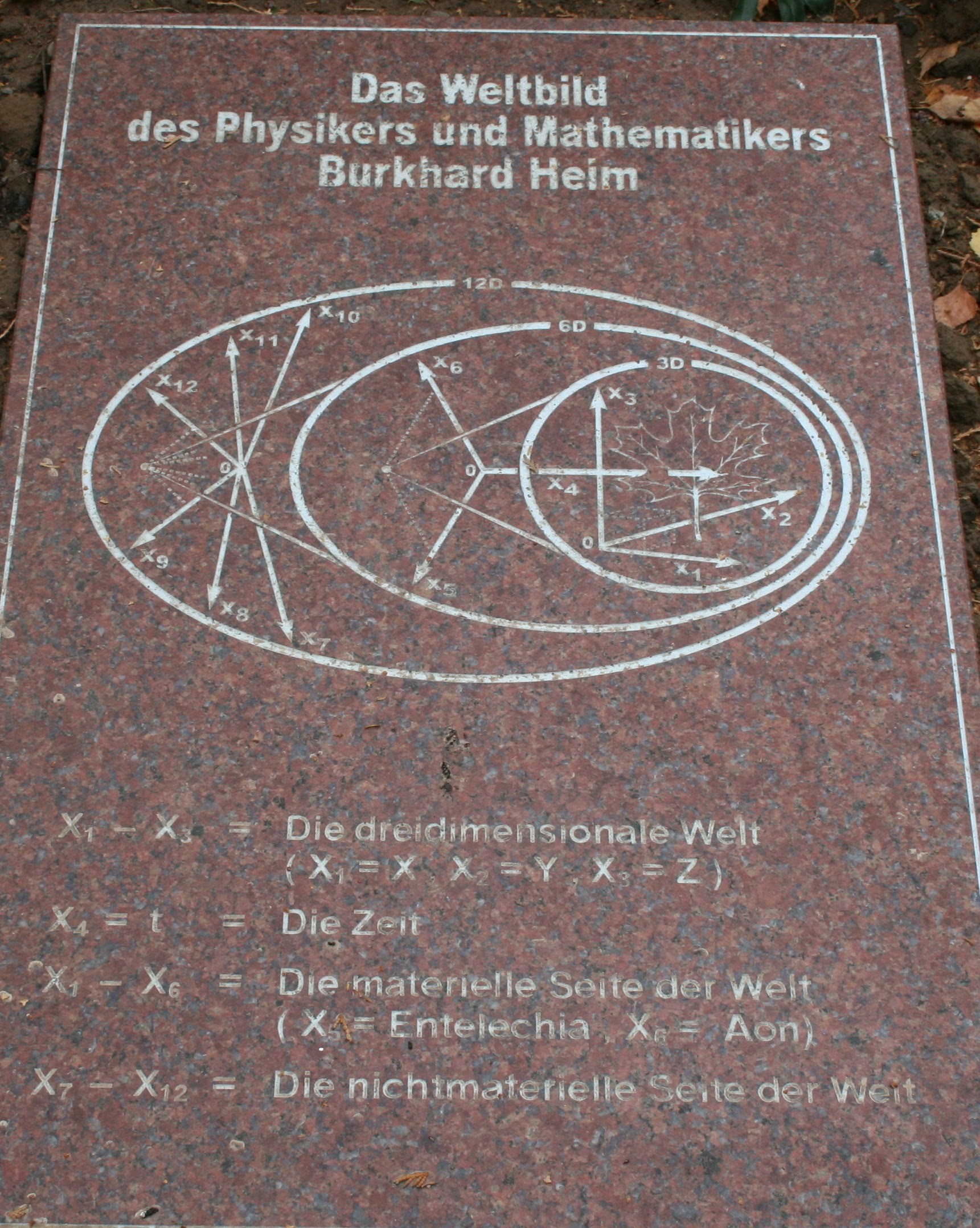
If Heim’s theory would only correctly predict the interior of elementary particles, would explain the geometrical reasons for all particle-properties and would answer astrophysical basic questions, it would be essential only for physicists – an important theory among several others. But Heim’s theory describes a world view which, in addition, is also of great importance for everybody. According to Heim, the mass spectrum is only describable within a world of six dimensions (three real and three imaginary). Therefore, also we humans must live in a world with six dimensions. The two additional dimensions are not – like in Kalzua-Klein theories – curled up in small areas, but they are in principle verifiable domains of the world. But they are not measurable by physical instruments and have an informational character since they describe qualitative aspects (meanings) of material organizations. That is the reason why Heim in the last years of his life developed an extended formal logic to describe quantitative as well as qualitative aspects uniformly. Only in this way it was possible to formalize biological and psychological processes (like consciousness) in a 6-dimensional manifold, and therefore also non-physical events. This will have exceptionally far-reaching consequences for all fields of science.
Until 2008, there was a research group Heim Theory consisting of scientists some of which had collaborated with Heim. Among those was, above all, Dipl.-Phys. Illobrand von Ludwiger (1937–2023). The goal was to call other physicists’ attention to this theory by suitable presentations of Heim’s works. The research group has dissolved due to advanced age and death of its members. Today, we operate a mailing list to facilitate academic exchange about Heim Theory.
Heim’s Worldview
Until 2001 a mysterious physicist lived in Germany who in the 1950s had achieved fame for a short time, but then continued working in obscurity. Only rarely did he lecture at congresses, and it was not before the 1980s that he published his work in two comprehensive volumes. The message he wanted to communicate is so difficult to understand that his work has scarcely been read. And yet, the system developed by him seems to mean a greater revolution than Einstein’s, as it directly affects human beings and their personal destinies.
If you ask physicists for their opinion about Burkhard Heim, you will hear judgments such as “misfit, odd loner, dubious dreamer, weirdo”, but also “the new Einstein, Germany’s Stephen Hawking, an ingenious thinker, someone who should be nominated for the Nobel Prize.” So which is true?
The first thing you will note is that the positive opinions have been uttered by those physicists who have known Burkhard Heim personally or have studied his work. By contrast, all critical judgments have come from physicists who have neither known Heim nor examined his work.
In the 1980s Burkhard Heim claimed to have found what Einstein and his successors have been looking for in vain to this day: a mass formula for all elementary particles and the explanation of their qualities by dynamic geometric structures.
That sounds incredible, as nobody thinks a physicist not integrated in the academic life capable of such an achievement. But Heim’s mass formula was already programed and analyzed by physicists at the Deutsche Elektronen-Synchrotron (DESY – German Electron-Synchrotron) in 1981 – with convincing results.
However, since nobody was able to understand the theoretical derivations of the formulas without prior familiarization, the DESY-physicists were stunned, but kept silent about this sensation and awaited the judgments of structural theorists and relativity theorists on the theory. As early as 2004 did the spokeswoman of DESY answer a journalist’s question as follows:
“The few people who have known Heim and some leading scientists have unequivocally come to the opinion that the mass formula is in any case an enormous personal achievement, especially considering his handicap. However, all of them hold the view that it is much too complicated, so that even very good theorists would need to occupy themselves with this theory for at least one year in order to be able to evaluate it.”
This is not about analyzing or defending Heim’s mass formula, but the present text shall give the readers the opportunity to form their own opinion about Burkhard Heim. For that purpose, Heim’s own words will be cited as often as possible. Wherever certain technical terms are used which are only known to physicists, such terms will be commented on, so that the reader will be able to follow Burkhard Heim’s explanations.
A theory that leads to the geometrical description of matter seems very reliable. – Other theories, such as String Theory, Loop-Quantum Gravity or the Standard Modell of particle physics, on the other hand, cannot reveal anything about the geometric structure of elementary particles of matter that has been proven in experiments. Thus, Heim’s system has proven correct – as measured by results. The philosophical consequences for us humans are enormous, as even qualitative aspects of matter, such as learning processes and consciousness, can be described by an aspectual logic newly developed by Heim. Heims occupation with the theory of elementary particles forced him, due to the 2 additional dimensions that had become mathematically necessary and which proved to be of organising kind, to integrate qualities into the total description of worldly events in a formal-logical way. Therefore, he had to develop a more general logic than the Aristotelic one. That is the subject of the present text…
Following the discovery of an additional 700 unpublished pages of manuscripts in Heim’s legacy, this text, which had already been written at that time, was supplemented by a number of citations taken from those manuscripts.

